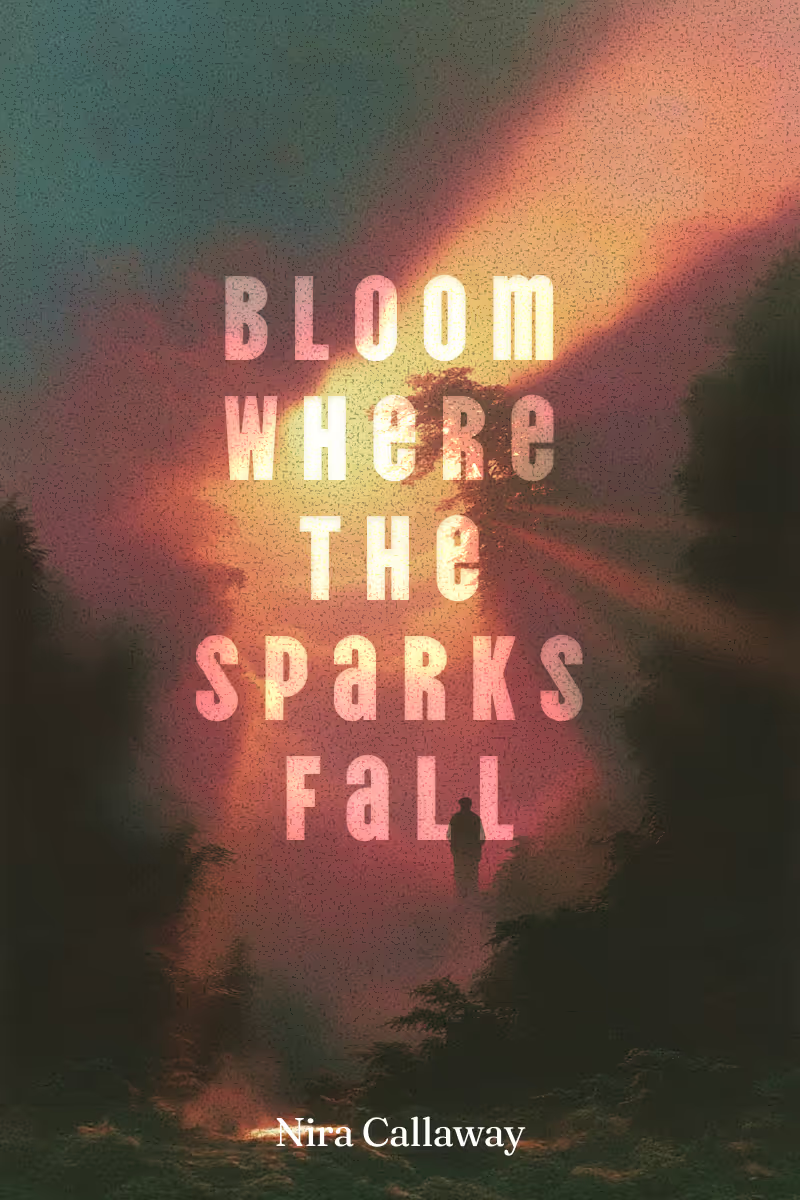
Some books carry the rhythm of a fuse burning—bright, urgent, unpredictable. Bloom Where the Sparks Fall is one of the rare novels that manages to be both explosive and tender at the same time. Callaway writes about a street photographer named Tamsin, who is obsessed with capturing “sparks”—the split-second moments of uncontrolled honesty in strangers’ faces. The story isn’t about art in the romantic sense; it’s about the way intensity and vulnerability coexist in everyone who’s trying to hold their life together.
What gives the novel its energy is the collision between Tamsin’s chaotic creative instinct and her fear of staying in one place too long. Callaway structures the story in bursts—chapters that feel like flashes of light, shifting quickly from city alleys to crowded train stations to impromptu rooftop gatherings. Every setting feels like it’s leaning forward, full of tension and movement. And through all of it, Tamsin keeps encountering people who change her sense of what a “moment” actually means—moments as catalysts, as ruptures, as mirrors.
But beneath the kinetic surface, the novel is fundamentally about emotional regeneration. Tamsin has been running from an old wound she never speaks about, and the book slowly weaves this silence into the color palette of the world around her. By the final third, the narrative becomes surprisingly intimate. Instead of asking why sparks happen, it asks what happens after the spark—when the light fades and something new must grow in its place. Callaway handles this shift with maturity and real emotional intelligence.
I finished the book with a sense of momentum, like I had been pulled through someone else’s storm and come out blinking in new light. It’s rare for a novel to be this vivid without losing its emotional depth, but Callaway makes it look effortless.