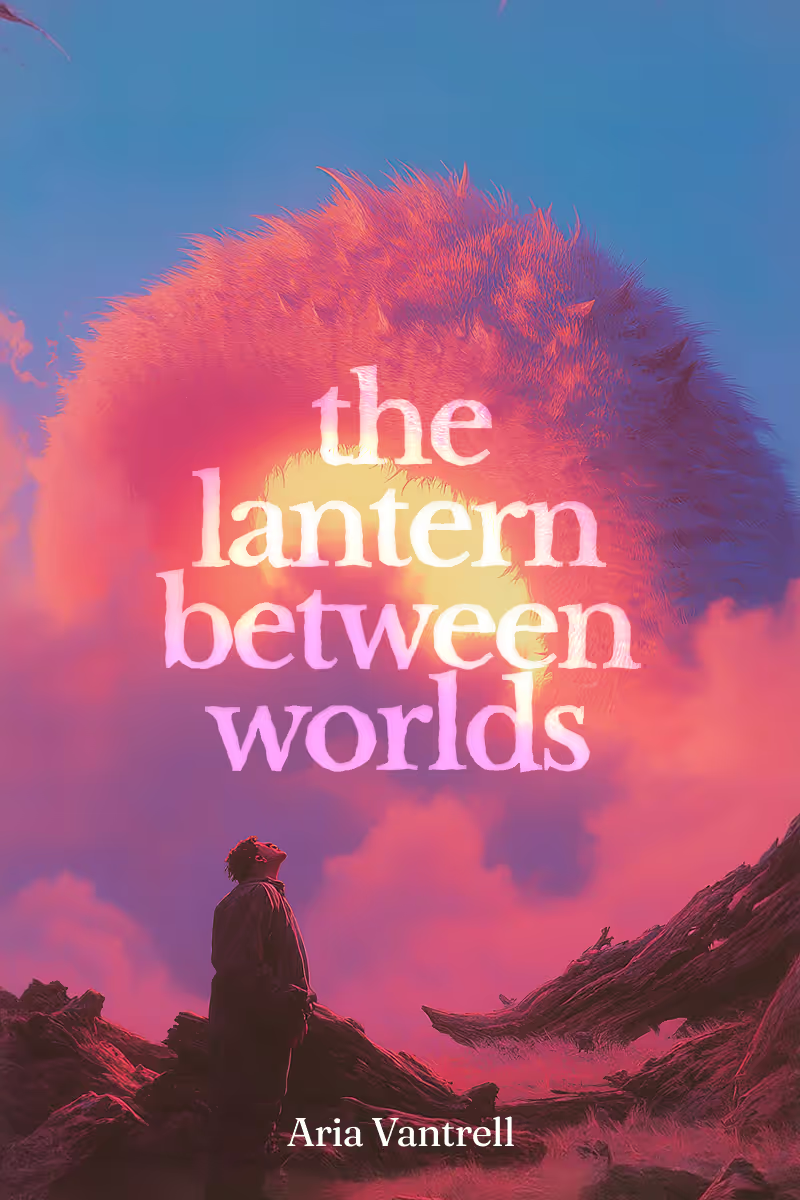
There’s a certain kind of book that doesn’t rush to convince you of its magic—it simply waits for you to notice it. The Lantern Between Worlds is exactly that kind of novel. Aria Vantrell writes with a softness that feels almost fragile at first glance, but the deeper you read, the more you realize how intentional that softness is. It’s a story about liminal spaces—those invisible thresholds we cross without understanding, the moments suspended between what we hoped for and what actually arrived. The protagonist, Nara, isn’t extraordinary in the conventional sense, yet her quiet curiosity makes the entire book glow with understated life.
What struck me most is how the novel treats uncertainty. Most stories try to resolve ambiguity as quickly as possible, but Vantrell lets it breathe. Nara’s discovery of doorways that appear only when she feels lost isn’t framed as fantasy; it’s framed as emotional geography. The “lanterns” she follows—small, pulsing lights that appear in moments of doubt—aren’t metaphors you decode but experiences you accompany her through. Reading these sections felt like walking through my own half-forgotten memories, the ones that resurface only when something in the present nudges them awake.
The pacing is intentionally slow, like a long night walk where every sound becomes meaningful. Vantrell uses silence as a storytelling tool—pauses between dialogue, empty rooms, landscapes that feel deliberately unfilled. Instead of making the novel feel hollow, these spaces invite you inward. I found myself reading more slowly than usual, lingering over sentences not because they were complex, but because they were true.
And maybe that’s why the book stayed with me: it reminded me that confusion is not failure, wandering is not weakness, and uncertainty is often the first sign that something within us is changing shape. When I closed the book, I didn’t feel like I had finished an adventure. I felt like I had been allowed to witness someone else figuring out how to be human—quietly, imperfectly, beautifully.