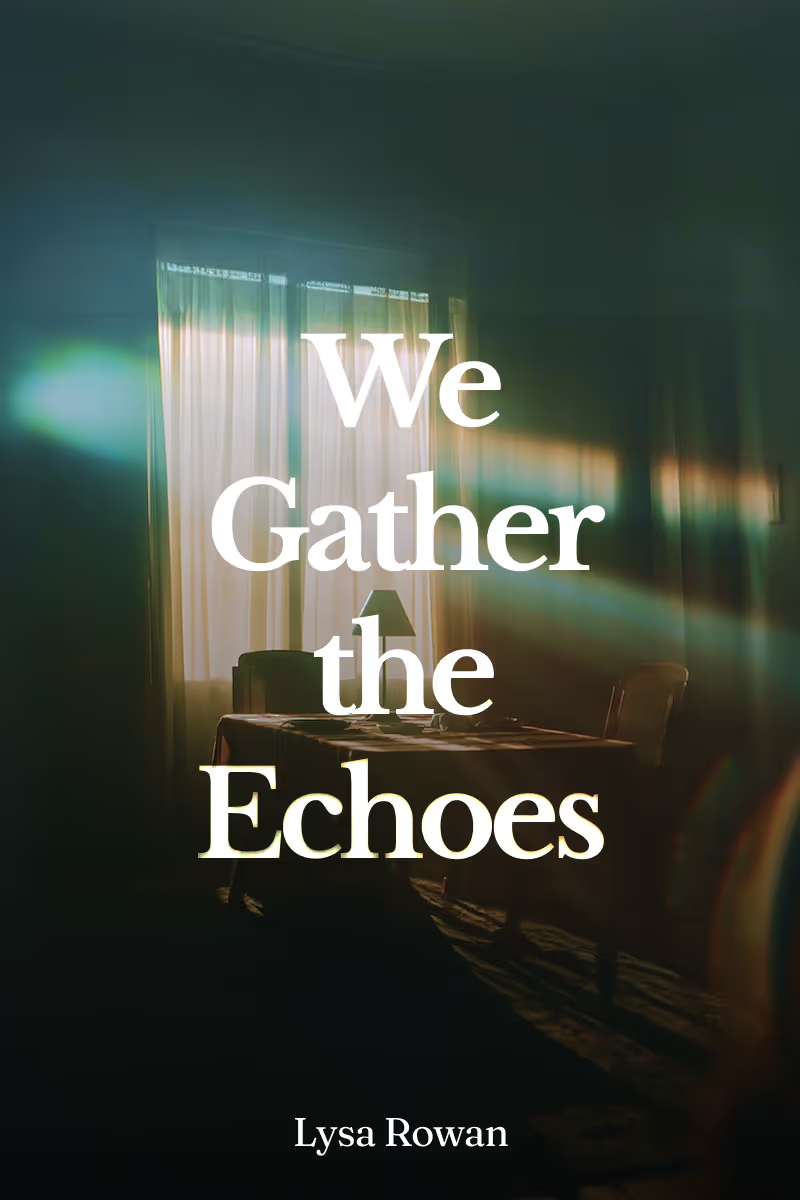
Some books feel like walking through a half-remembered conversation. We Gather the Echoes carries that sensation from its first page to its last. Rowan writes about estrangement—not as a dramatic rupture, but as something that accumulates slowly, like dust settling on objects you meant to touch but didn’t. The protagonist, Adrian, returns to the apartment he once shared with his brother, only to find it filled with echoes: half-packed boxes, notebooks with unfinished thoughts, photographs intentionally turned face-down.
What makes the novel captivating is its subtle emotional architecture. Rowan avoids big confessions or theatrical confrontations; instead, she allows the story to unfold through sensory misalignments—sounds that don’t belong, conversations that taper off mid-sentence, memories that surface only in fragments. The real narrative isn’t in what the brothers said to each other, but in what they avoided saying for years.
The book’s pacing is deliberate and quiet, but never stagnant. Each chapter is built around a single object Adrian finds while cleaning the apartment—an old metro ticket, a cracked mug, a forgotten voice memo. These objects become coordinates in the emotional geography of the brothers’ shared past. The novel asks whether we can rebuild relationships from the remnants we left behind… and whether those remnants even belong to us anymore.
Rowan’s prose stands out for its clarity. There’s no ornamental excess, no stylistic noise. Instead, she writes with a kind of disciplined softness, each sentence moving with intention. The ending doesn’t promise reconciliation, only understanding—and somehow that feels more truthful. When I closed the book, I felt like I had set down something heavy that wasn’t mine to carry.