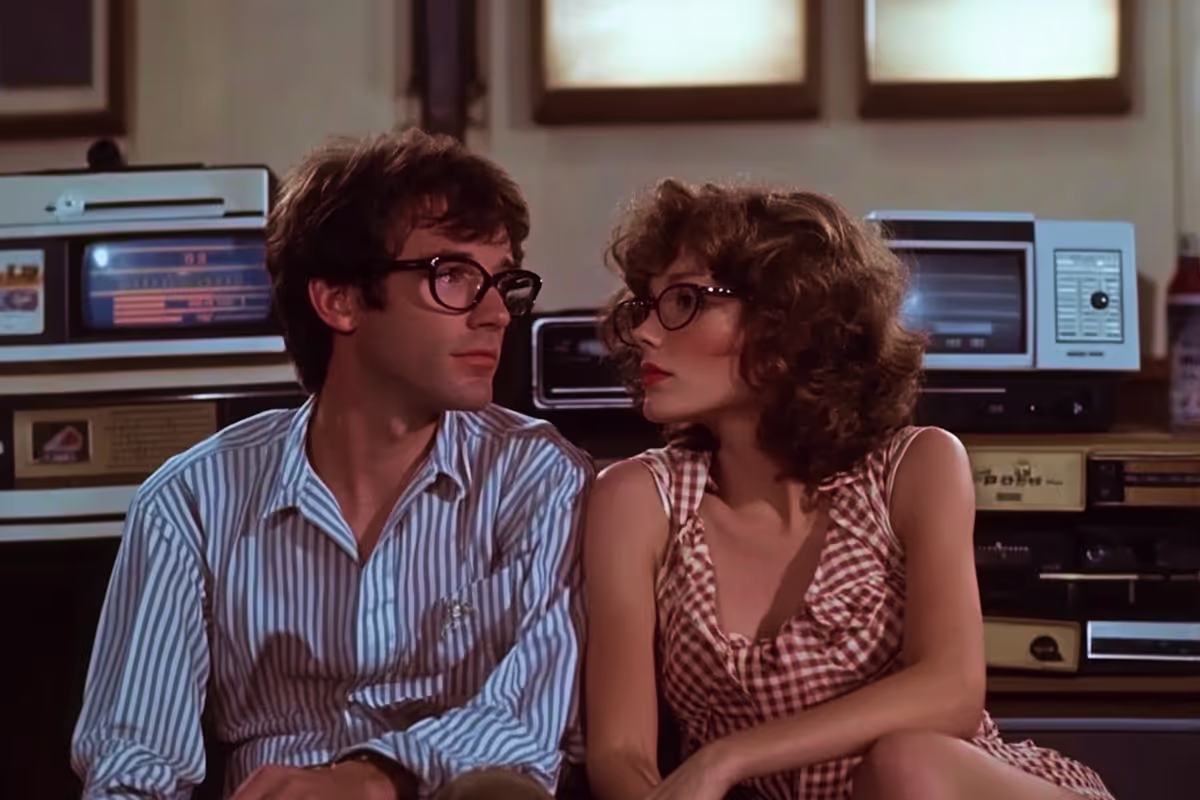
Every once in a while, a single scene from a film lodges itself in your mind and refuses to leave, not because it is the most dramatic or visually impressive moment, but because it carries a quiet truth that keeps unfolding long after the movie is over. I experienced that again recently—a scene I had seen before, but for some reason, it echoed differently this time. It was a deceptively simple moment: two characters sitting together, saying almost nothing, yet their silence wasn’t empty. It was saturated with everything they didn’t know how to say aloud. The camera didn’t rush; it held the space with a rare kind of patience, letting the smallest gestures—a shift of posture, a half-smile, a slow inhale—do the heavy lifting of the storytelling. I found myself replaying it mentally hours later, trying to understand why it stayed with me so persistently. This experience served as a poignant reminder that the most profound cinematic experiences aren't always found in the spectacle, but in the microscopic details of human connection. It made me realize that some scenes don't just tell a story on the screen; they reach out and tap into the unfinished narratives we carry within ourselves, turning a fleeting cinematic moment into a permanent emotional landmark that we revisit whenever we encounter a similar stillness in our own lives.
The Power of the Cinematic Stillness
In a world that is increasingly loud and fast-paced, the decision to let a camera linger on a quiet moment is a bold artistic choice. It shifts the burden of narrative from the script to the soul of the viewer. When a film strips away the distractions of swelling orchestral scores or rapid-fire dialogue, it creates a vacuum that the audience must fill with their own empathy and intuition. This stillness becomes a canvas where the internal lives of characters are painted not with words, but with the raw energy of their presence.
The Eloquence of the Unspoken
Maybe it’s because life is filled with these unspoken moments—conversations where what matters most is never actually said. We spend so much of our existence navigating complex interactions where the true meaning hides in the pauses, the averted eyes, and the hesitant breaths rather than the literal dialogue.
The Tension of the First Word
The scene captured the strange, aching tension between the desperate wanting to speak and the paralyzing fear of not knowing where to begin. It suggests that our most significant bonds are often forged in the gaps between sentences, where two people understand each other perfectly without the clumsy intervention of language.
The Mirror of Hidden Truths
It also made me think about how cinema reveals truths we rarely admit to ourselves in the light of day. We often talk about powerful monologues and dramatic confrontations as the hallmarks of great acting, but sometimes the most honest storytelling happens in total, unyielding quiet.
Confronting the Avoided
The reason this scene keeps echoing in my mind is because it held up an emotional mirror. This kind of mirror doesn't show your physical reflection; it shows the conversations you’ve avoided, the feelings you’ve postponed for a "better" time, and the things you’ve felt in the dead of night but never found a name for. It forces a confrontation with the "unfinished business" of our hearts.
The Awakening of Personal Meaning
Ultimately, the beauty of film lies in the realization that meaning is not a fixed point on a screen, but a fluid interaction between the art and the observer. Some scenes stay with us because they act as keys, unlocking doors to rooms within us that we have kept shuttered.
The Spectator's Contribution
Meaning doesn't always come from the plot progression or the director's intent; it arises from what the scene awakens in your own history. When a film captures the weight of a look, it invites you to step into that space and confront your own stories. It is a testament to the fact that the most resonant films are not those that provide all the answers, but those that ask the most beautiful, silent questions.